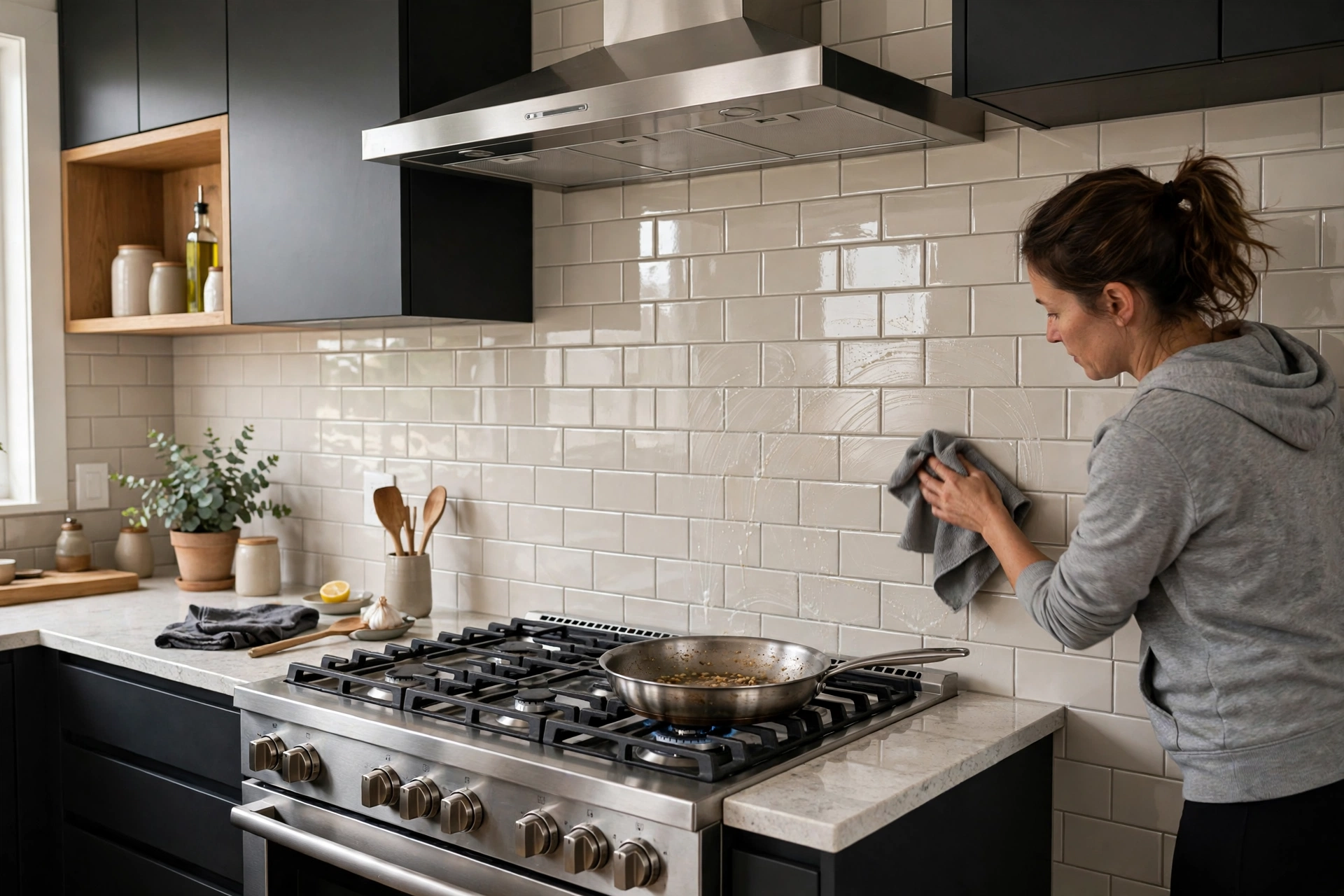
Every home cook knows the moment: the pan is off the heat, dinner smells wonderful, and the wall behind the hob is freckled with tiny oil droplets. Left alone, those droplets harden into a dull, sticky film that seems to laugh at a quick wipe. The difference between a wall that wipes clean in two minutes and one that demands a weekend of scrubbing is rarely how hard you clean. It is what the wall is made of, and whether grease has anywhere to hide.
The Short Answer: A Smooth, Seamless Wall Behind the Hob Beats Any Scrubbing Routine
The easiest cooking wall to keep clean is a smooth, non-porous surface with as few joints as possible: a quartz slab, tempered glass, a stainless steel panel, or large-format glazed tile. Grease sits on these surfaces instead of soaking in, so a warm, soapy cloth lifts it in one pass. Small tiles with many grout lines, unsealed stone, and textured finishes all give grease somewhere to settle, so they take longer to clean. Fewer seams, smoother surface, faster wipe-down.
Why Grease Clings to Some Backsplashes and Slides Off Others
Cooking grease does not arrive as a neat puddle. Hot oil throws off fine droplets and vapour that cool on contact and form a thin film. Given a few hours, that film oxidises and bonds more tightly, which is why yesterday’s splatter is harder to remove than today’s. Porous surfaces absorb the film into tiny pits, so scrubbing only reaches the top layer, while rough textures hold it in their valleys. Smooth glazed or sealed surfaces leave the film stranded on top, where dish soap can lift it away with warm water. Heat makes it worse: the strip behind a burner bakes splatter on, and repeated heating and cooling opens hairline cracks in grout and unsealed stone.
The Wipe-Down Test: Ranking Cooking-Wall Materials by Cleaning Effort
The table below ranks common cooking-wall materials by the effort a routine wipe-down takes.
Two patterns stand out. The jump from small tiles to a slab or panel is worth more than the jump between tile types: removing grout lines removes most of the work. And cleaning effort is set at installation: once a porous or heavily jointed surface is on the wall, no cleaner fully compensates.
Grout Is the Real Grease Trap, and Three Fixes Shrink It
Ask anyone who has scrubbed a cooking wall and they will say the same thing: the tile wipes clean in seconds, and the grout takes the rest of the afternoon. Cement-based grout is porous, so it drinks in grease and holds it. Three fixes reduce that burden. Use larger tiles, which cut the total length of grout lines behind the hob. Choose a darker grout colour, which hides discolouration between deep cleans. Or use epoxy grout: a resin-based grout that is effectively non-porous and stain-resistant, so grease stays on its surface like it does on tile. Epoxy grout costs more and sets fast, so many homeowners use it only behind the range. Sealing standard grout is cheaper, but sealers wear down under heat and need reapplying once or twice a year behind a hard-working hob.
Your Three-Speed Cleaning Routine: 30 Seconds, 10 Minutes, One Deep Clean
A good routine beats a heroic one. Grease wiped while still warm never hardens, so the cheapest cleaning tool in the kitchen is timing:
After cooking, while the wall is still slightly warm: wipe the cooking zone with a damp microfibre cloth and a drop of dish soap, working top to bottom. This 30-second pass removes most fresh splatter before it sets.
Once a week: sponge a warm, soapy solution over the whole cooking wall, let it sit for a few minutes, wipe with a clean cloth, then buff dry, including grout lines and edges around outlets and the range hood.
Once a month: deep clean. Apply a degreasing solution, let it dwell (see below), clean grout with a soft brush and baking soda paste on glazed tile, rinse, dry, and check the sealer on any stone or standard grout.
Fold a microfibre cloth into quarters and rotate to a fresh face as you go, so you lift grease rather than spread it. On stainless steel, wipe with the grain; circular scrubbing leaves swirl marks. On glass, a final dry buff prevents streaks.
The Dwell-Time Trick That Removes Baked-On Grease Without Hard Scrubbing
The most useful technique for a greasy cooking wall is also the simplest: let the cleaner do the work. Spray a degreasing solution onto the greasy area, lay a damp cloth over it to slow evaporation, and leave it for 10 to 20 minutes, or up to 30 minutes for heavy build-up. The solution softens the bond between grease and surface, so most of it wipes away gently. Repeat rather than scrub harder if needed. This works on glazed tile, glass, stainless steel, and sealed surfaces, and it is gentler than abrasive pads, which dull glazes and scratch steel. Test any new cleaner on a hidden spot first, and never use vinegar or citrus cleaners on natural stone.
What Each Cooking-Wall Material Needs When It Gets Greasy
Cleaning advice only works when it matches the surface. The spray that is perfect for tile can damage stone, and the polish that revives steel is pointless on glass.
- Glazed ceramic, porcelain, and glass tile: hot water, dish soap, and a soft cloth. For grout, a baking soda paste and a soft toothbrush.
- Tempered glass panels: dish soap and water, then a dry microfibre buff. Avoid abrasive pads, which scratch the surface.
- Stainless steel: mild dish soap and warm water, wiped with the grain, then dried. A whisper of mineral oil restores shine. Avoid steel wool and chlorine cleaners.
- Quartz slab: warm soapy water and a soft cloth. Nothing to seal, but avoid harsh solvents and abrasive pads.
- Natural stone (marble, granite, quartzite): pH-neutral cleaner or mild dish soap only, never vinegar or lemon. Seal on installation and reseal on schedule.
- Peel-and-stick or vinyl panels: a damp cloth and mild soap. Check heat ratings before placing them behind a gas burner.
How High and How Wide the Protected Zone Behind a Range Should Reach
A beautiful material does little good if grease lands above or beside it. Splatter arcs up and out, and steam carries a fine mist higher still. As a practical rule, the protected zone should extend the full width of the range plus a margin on each side, and up to the range hood or, where there is no hood shelf, to the ceiling behind the range. Many homeowners run the backsplash to the ceiling behind the hob while keeping it at counter height elsewhere. Coverage matters for the wall itself: grease that reaches bare painted drywall soaks in and yellows. If a renovation is not on the cards, a removable stainless splatter guard or a tempered glass panel protects the worst-hit strip without a rebuild.
When the Wall Behind the Hob Is Already Greasy or Damaged
Start with a test: clean one small section using the dwell-time method and see whether it returns to its original colour. If it does, the wall is dirty, not damaged, and a routine plus resealing may be enough. If grease has soaked into unsealed stone, stained grout permanently, or yellowed paint that crumbles when scrubbed, cleaning will not restore it. Cover rather than fight: a stainless panel or glass sheet over the damaged strip, or new large-format tile over a sound substrate. Check the substrate first, though: soft, swollen drywall or a musty smell can signal moisture damage that covering would trap.
What a Low-Effort Cooking Wall Costs, From a Panel to a Full Slab
Costs below are broad estimates based on commonly published retail and installer pricing, varying by region, kitchen size, and finish. Treat them as planning figures, not quotes.
The cheapest option is not always the cheapest over time. A panel replaced in three years, or grout resealed twice a year, can cost more in attention than a slab that simply wipes clean.
Slip-Ups That Turn a Five-Minute Wipe Into a Weekend Scrub
- Waiting until the weekend to wipe a wall splattered on Monday. Set grease is the real enemy; warm, same-day wiping is the cheapest habit in the kitchen.
- Scrubbing in circles on stainless steel or glass. Circular motion leaves swirl marks and streaks that look dirty even when clean.
- Using vinegar or citrus cleaners on natural stone. The acid etches the surface, creating a dull patch that then holds grease even faster.
- Sealing grout once and forgetting it. Sealers wear out behind a hot hob, and unsealed grout quietly returns to absorbing grease.
When a Grease-Stained Cooking Wall Belongs With a Tiler or Installer, Not a Sponge
Most grease cleaning is a homeowner job. Call a professional when the problem has moved past the surface: cracked or loose tiles, grout that crumbles when touched, soft or swollen wallboard, or a persistent musty smell suggesting trapped moisture. A tiler can also handle jobs where DIY mistakes are expensive, such as cutting a quartz slab, templating a glass panel, or re-grouting in epoxy. For gas ranges, keep clearances in mind: combustible materials such as wood panelling should not sit directly behind a burner; steel, tile, or glass is safer. If unsure, an installer or the range manufacturer’s guidance is the authority.
Cooking-Wall Grease Questions Homeowners Ask Before Choosing a Backsplash
Which backsplash material is genuinely the easiest to wipe grease off?
A seamless surface: a quartz slab, tempered glass panel, or stainless steel sheet. With no grout lines and no pores, grease stays on the surface and lifts with a warm, soapy cloth. Large-format glazed tile is the closest budget equivalent.
Does vinegar damage a backsplash when cleaning grease?
On glazed tile and glass, a diluted vinegar wash is fine, though dish soap alone usually does the job. On natural stone, vinegar and citrus cleaners etch and dull the surface, so use a pH-neutral cleaner or mild dish soap instead.
How do I clean grease from grout without damaging the tile?
Use a baking soda paste and a soft brush, working along the grout line rather than scrubbing the tile face. For a lasting fix, consider epoxy grout in the cooking zone, since it does not absorb grease like cement grout.
How high should a backsplash go behind a stove?
At least to the underside of the range hood, and ideally to the ceiling behind the range, since steam carries grease mist higher than pan splatter alone. Extend the protected width beyond the range on both sides too.
Can I protect the wall behind my stove without replacing the backsplash?
Yes. A freestanding stainless splatter guard, a mounted tempered glass panel, or a stainless sheet over the worst-hit strip all shield the wall without a renovation. Make sure any panel near a gas burner is heat-rated and non-combustible.
Why does grease keep coming back in the same spot even after cleaning?
Usually because it has soaked into porous grout, unsealed stone, or damaged paint. Once grease is inside the material, surface wiping only removes the top layer. Resealing, re-grouting, or covering that section is the lasting fix.
A Cooking Wall That Wipes Clean in Minutes, Not Hours
The secret to a grease-free cooking wall is not a stronger cleaner. It is a surface that gives grease nowhere to go: smooth, sealed, joined as little as possible, sized to cover the full splatter zone, and wiped while the pan is still warm. Choose the material by the minutes it will save you every week, protect the wall behind the hob first, and let dwell time handle the occasional baked-on patch. Your next step is simple: walk to your hob and count the joints behind it. Every joint you eliminate is a minute you will never spend scrubbing again.