The most effective window replacement strategy for an older home is to repair and weatherstrip windows that are structurally sound, add storm windows where the originals are worth keeping, and replace only the units that are rotted, warped, or single-glazed beyond saving, using full-frame installation with proper flashing. This staged approach cuts drafts and energy loss without stripping the house of the windows that give it its character, and it costs far less than replacing every window at once.
Old windows are usually blamed for every draft in the house, and they are often guilty, but not always in the way owners assume. In many older homes the glass is fine and the real problem is air leaking around the frame, through worn weatherstripping, or past a failed sash. The strategy below starts with diagnosis, so money goes to the windows that actually need it, and the ones that can be saved get saved.
Why Old Windows Cost More Than They Look
Windows are the weakest link in most older building envelopes. The U.S. Department of Energy notes that heat gain and heat loss through inefficient windows account for roughly a quarter to nearly a third of residential heating and cooling energy use, and in an older home with single-pane glass that share can be higher. Single-pane windows common before the 1980s lose heat fast, and their cold interior glass surfaces chill the air beside them, creating the cold pools on the floor that make a room feel drafty even when no air is actually leaking.
The cost is not only energy. Drafty windows force the heating system to run longer, which shortens equipment life. Condensation on cold glass feeds mold on sills and trim. And in noisy streets, thin single glazing does almost nothing to block sound. Yet the answer is not always new windows: a well-maintained original wood window with a good storm panel can cut energy loss by roughly half, which is why the first step is always assessment, not a shopping trip.
Which Windows Deserve Replacing and Which Can Be Saved?
Walk the house with a candle or a stick of incense on a windy day and watch the flame near each window. Check every sash for rot by pressing a screwdriver into the wood: sound wood resists, rotted wood sinks in easily. Look for fogging between panes, cracked glazing putty, sashes painted shut, and frames that have racked out of square. A window with solid wood, working hardware, and intact glass is a candidate for repair. A window with rotted sills, a failed seal, or a frame so warped it will not close is a candidate for replacement.
Age alone is not a reason to replace. Original old-growth wood windows are dense, stable, and naturally rot-resistant, and with simple paint and maintenance they can last a century or more, far longer than the ten to twenty years many modern replacement units last before their seals fail. Historic character matters too: original glass has a gentle wave, and thin muntin profiles are almost impossible to reproduce exactly with a modern unit. If the window is sound, saving it is usually the better investment.
Repair, Retrofit, or Replace: The Honest Comparison
Most older homes need a mix of all three approaches. This comparison shows what each one delivers and where it makes sense.
Reading the NFRC Label: U-Factor, SHGC, and Air Leakage
When you do buy new windows, the National Fenestration Rating Council label is your best friend, because it gives standardized numbers you can compare across brands. The U-factor measures how well the window prevents heat from escaping: lower is better, and a good replacement window for a cold climate sits around 0.25 to 0.30. The Solar Heat Gain Coefficient measures how much solar heat passes through: lower suits hot climates, higher can help in cold ones. Air leakage, listed on the label, should be as low as possible, ideally 0.3 cubic feet per minute per square foot or less.
- Look for the NFRC label on every unit, and compare U-factor first when heating dominates your climate.
- Check the Solar Heat Gain Coefficient second: in hot, sunny regions a low value cuts cooling load noticeably.
- Ask about the air leakage rating; a tight window matters as much as good glass.
- Do not judge a window by brand alone: two models from the same maker can carry very different ratings.
Low-emissivity coatings are standard on quality replacement windows and deserve a mention. The microscopic metallic coating reflects interior heat back into the room in winter and reflects solar heat away in summer. Combined with argon gas between double or triple panes, it is the main reason a modern unit can outperform a single-pane original by such a wide margin.
Wood, Fiberglass, Vinyl, and Aluminum-Clad: Matching Frame to House
Frame material is a trade between looks, maintenance, and performance. Solid wood is the most historically accurate choice, insulates well, and can be painted or stained to match existing trim, but it needs regular painting. Fiberglass is the durability champion: it resists warping, rotting, and swelling, holds paint well, and performs strongly in extreme temperatures. Vinyl is the budget option, with good insulation and almost no maintenance, though its thicker frames reduce glass area and its color choices are limited. Aluminum-clad wood splits the difference, with a wood interior for looks and a low-maintenance aluminum exterior for weather protection.
For a historic facade, fiberglass or wood usually wins, because both can be made with the slim profiles and divided lites that match the original. For a rental or a house where maintenance will be minimal, vinyl or fiberglass makes more sense. Whatever you choose, make sure the frame material suits your climate: vinyl can flex in extreme heat, and bare aluminum without a thermal break is a poor insulator in cold regions.
Double or Triple Glazing and Low-E Coatings That Tame Drafts
Glazing is where the performance jump happens. A single pane of glass has almost no insulating value. Double glazing with a low-E coating and argon fill roughly doubles the thermal resistance, and triple glazing adds another step, mostly valuable in very cold climates or noisy locations. The spacer between panes matters too: warm-edge spacers reduce condensation at the glass edge, the place where fogging and frost usually appear first.
Do not overbuy glazing for a mild climate. Triple glazing costs more, weighs more, and its extra benefit is small where winters are gentle. Spend the difference on better air sealing and flashing instead, which pay off in every climate. And remember that glass area matters: a replacement unit with a thick frame and small glass can feel darker than the original, so compare visible glass area, not just the overall unit size.
Insert Replacement Versus Full-Frame Installation
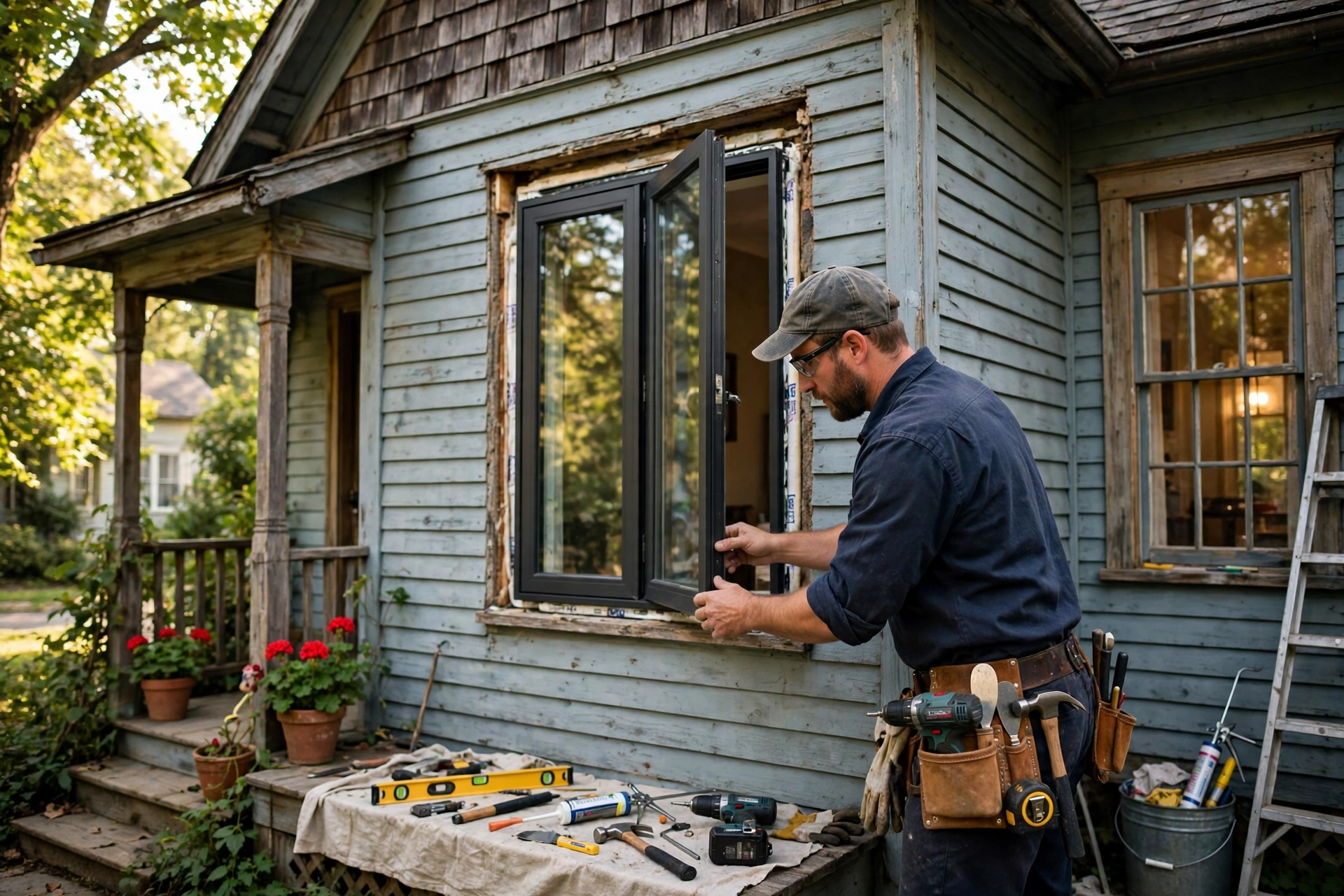
Insert replacement, sometimes called a pocket install, fits a new window into the existing frame. It is faster, cheaper, and preserves interior and exterior trim, which matters in an older home. Full-frame installation removes everything down to the rough opening, which lets the crew inspect for rot, insulate the gaps, and install proper flashing. The right choice depends on the condition of the existing frame.
- Inspect the existing frame for rot, squareness, and solid anchoring before choosing a method.
- For insert installs, measure the opening in three places and order to the smallest dimension.
- Set the new unit level, plumb, and square, shimming at the corners, never in the middle of a side.
- Seal the gap with low-expansion foam made for windows, not standard foam that can bow the frame.
- Apply flashing tape over the sill and up the sides, then seal the exterior with a compatible caulk.
- Test every sash for smooth operation and check the reveal is even before the trim goes back on.
Flashing, Air Sealing, and the Ventilation Question Nobody Asks
The best window in the world fails if it is installed badly, and most window failures are installation failures. Water must be directed out at every layer: a sloped sill pan or flashing membrane under the unit, flashing tape lapped shingle-style up the sides, and a head flashing that sheds water over the top. On the inside, the gap between the window and the rough opening must be air-sealed, because that gap is a direct path for drafts and humid air that condenses inside the wall.
There is one more thing new windows change: ventilation. Old leaky windows provided accidental fresh air, and tight new windows remove it. After a whole-house replacement, some homes develop condensation or stale air because the house is now much tighter. Plan for controlled ventilation, such as trickle vents in the window frames or a heat-recovery ventilator, so the house stays fresh without giving back the energy you just saved.
Window Replacement Costs in Broad Terms
Costs vary widely by size, material, and installation method. As a broad guide, a professionally installed replacement window commonly runs from a few hundred to well over a thousand dollars per unit including labor, with wood and fiberglass at the higher end and vinyl at the lower. Full-frame installation adds labor and trim work, while historic matching, custom sizes, and triple glazing push costs up further. Storm windows and weatherstripping cost a fraction of replacement and deliver a large share of the benefit, which is why a staged plan usually gives the best return per dollar.
When Window Work Needs a Preservation Specialist or Licensed Pro
Call a preservation specialist before replacing windows in a historic or listed property: local rules may restrict what can change, and a specialist knows how to upgrade performance while keeping the facade intact. Bring in a licensed contractor for full-frame replacements, structural repairs, or any job involving lead paint, which is common in homes built before 1978 and requires certified handling. If the frame is rotted through, the wall around it is wet, or the opening is out of square by more than a small amount, that is not a DIY job. A good installer will show you the flashing details before covering them with trim, and will test every window with you before leaving.
Final Thoughts: Are New Windows the Right Move for Your Older Home?
New windows are a wonderful upgrade when the old ones are truly beyond saving, but they are not the only route to a comfortable older home, and often not the best first step. Repair the sound ones, add storm windows where they earn their keep, and replace the failures with well-chosen units installed with proper flashing and air sealing. The result is a house that holds its heat, stays quiet, and still looks like itself, which is the whole point of owning an older home in the first place.
Window Replacement FAQs for Older Residential Properties
How do I know if my old windows need replacing?
Press a screwdriver into the wood: if it sinks in, the wood is rotted. Fog between panes means a failed seal. Sashes that will not open or close, frames out of square, and cracked glazing putty are also strong signs that replacement is the right call.
Are storm windows as good as replacement windows?
Not quite, but they are closer than most people think. A good storm window over a sound original can cut energy loss by roughly half, at a fraction of the cost of replacement. For historic homes, that combination is often the best balance of performance, cost, and character.
Will new windows eliminate drafts completely?
They will eliminate drafts from the windows themselves, provided the installation is air-sealed properly. Drafts from other sources, such as the attic hatch, rim joists, and electrical penetrations, will remain, so treat windows as one part of a whole-house air sealing plan.
What is the best window material for an old house?
Wood and fiberglass usually match historic homes best, because they offer slim profiles and can be painted to match existing trim. Vinyl is cheaper and nearly maintenance-free but has thicker frames. Aluminum-clad wood gives a wood interior with a weatherproof exterior.
Do I need a permit to replace windows?
It depends on your location and whether the work changes the opening size or the structure. Simple like-for-like replacements often do not need a permit, but enlarging openings or working on a historic property usually does. Check with your local building department first.
How long do replacement windows last?
Most modern replacement windows last roughly twenty to thirty years before seals begin to fail, though quality varies widely. Original old-growth wood windows, by contrast, can last a century or more with basic maintenance, which is why saving sound originals is usually worth the effort.